“US Peacekeeper Because Of Tariffs”: Trump’s Big Claim On India-Pakistan Truce
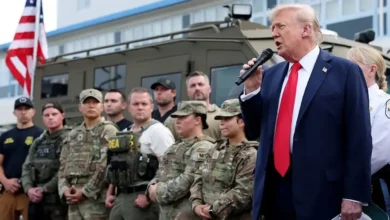
Trump was asked whether he would change his position on tariffs. He told reporters at the White House, "If I didn't have the power of tariffs, you would have at least four of the seven wars raging."

By Orlin Milinov
Washington —
US President Donald Trump has once again claimed that his administration’s trade tariffs were instrumental in brokering peace between India and Pakistan, suggesting that his tough economic policies prevented potential military conflicts between the two nuclear-armed nations.
Speaking to reporters at the White House, Trump said his controversial tariff policies not only strengthened America’s economy but also made the United States a global peacemaker.
“If I didn’t have the power of tariffs, you would have at least four of the seven wars raging,” Trump remarked confidently.
“If you look at India and Pakistan, they were ready to go at it. Seven planes were shot down… I don’t want to say exactly what I said, but what I said was very effective. Not only did we make hundreds of billions of dollars, but we’re a peacekeeper because of tariffs.”
Trump’s Ceasefire Claims
This is not the first time President Trump has credited himself with facilitating peace between New Delhi and Islamabad. Earlier in May, Trump announced via social media that India and Pakistan had agreed to a “full and immediate” ceasefire following what he described as a “long night” of negotiations mediated by Washington.
Since then, the US President has repeatedly asserted that his intervention — and his use of economic leverage — was key in cooling tensions between the two neighbours.
In an August interview, Trump went a step further, revealing that he had threatened Prime Minister Narendra Modi with harsh trade measures if the conflict continued.
“I said, ‘I don’t want to make a trade deal with you… You guys are going to end up in a nuclear war,’” Trump recounted.
“‘Call me back tomorrow, but we’re not going to do any deals with you, or we’re going to put tariffs on you that are so high, your head’s going to spin.’”
According to Trump, within five hours of his conversation with PM Modi, both nations agreed to a peace deal — an outcome he claimed as a testament to his diplomatic prowess and economic strategy.
India’s Official Response
However, India has consistently denied that the United States played a direct role in the ceasefire. According to New Delhi, the decision to halt cross-border hostilities was reached after Pakistan’s Director General of Military Operations (DGMO) reached out to his Indian counterpart to discuss de-escalation.
Pakistan initially dismissed Trump’s statements, calling them exaggerated, but later acknowledged Washington’s indirect influence in easing tensions. In a surprising turn, Islamabad even nominated Donald Trump for the 2026 Nobel Peace Prize, citing his “decisive diplomatic intervention and pivotal leadership” during the crisis.
The Bigger Picture
Trump’s remarks once again highlight his belief that economic pressure can substitute for military force in resolving international disputes. While his claims have drawn skepticism from foreign policy experts, they underscore his broader message — that tariffs and trade leverage are tools of peace, not merely instruments of protectionism.
As Trump continues his push for re-election, his self-proclaimed role as a “global peacekeeper through tariffs” could become a key talking point in his campaign — especially among voters who view his assertive foreign policy as a marker of American strength.