Tony Abbott: “India’s Future PM Could Lead the Free World Within 50 Years”
Former Australian Prime Minister says India is rising as a democratic superpower and global counterweight to China

By Orlin Milinov
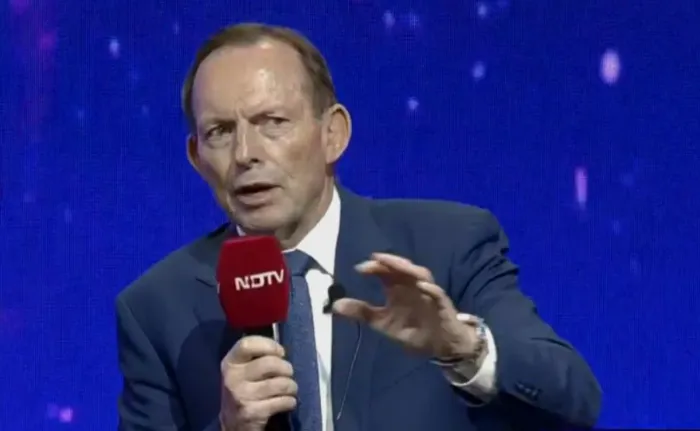
New Delhi — Former Australian Prime Minister Tony Abbott has said that India is poised to become the defining global power of the 21st century, predicting that an Indian Prime Minister — whoever holds office four to five decades from now — could succeed the President of the United States as the “leader of the free world.”
Speaking at the NDTV World Summit 2025 on Friday, Abbott urged India to embrace its growing role as a global superpower and as a “democratic counterweight” to China in the Asia-Pacific region. He described India as a “strong, reliable partner” for Australia and the wider democratic world.
‘The 21st Century Belongs to India’
“India is now the most populous country. You go to any Indian city — there’s a massive infrastructure push, new airports, new highways. India is rising and can be a substitute for China,” Abbott said.
He noted that India’s political and social foundations — democracy, the rule of law, and the English language — provide it with key advantages over China as it prepares for the kind of economic and military ascent Beijing achieved decades ago.
“As Prime Minister, I used to say India will emerge as a democratic superpower. Well, now that has happened,” Abbott said. “The PM of India is likely to be the leader of the free world in the next 40 to 50 years.”
A Shift Away from China
Abbott highlighted recent trade agreements — including India’s 2022 deal with Australia and a pact with the United Kingdom last month — as proof that the democratic world is diversifying away from Beijing’s economic dominance.
He called on New Delhi to “play its role” as one of the new pillars of global democracy, noting that “Delhi holds the key to checking Beijing’s ambitions to dominate the world.”
Warning Over Taiwan and China’s Intentions
Addressing tensions in the Taiwan Strait, Abbott cautioned against underestimating China’s intentions, urging democracies to remain vigilant.
“The best way to ensure nothing untoward happens is not to pretend that China has peaceful intentions,” he said. “Weakness is provocative. It’s possible to defend Taiwan — the danger is escalation.”
He warned that the world must “hope and pray” to avoid a situation similar to the Korean War, but emphasized that deterrence and preparedness were essential.
Ukraine, the West, and Strategic Lessons
Abbott also drew parallels with the war in Ukraine, arguing that Russia would not have invaded if Ukraine had been a member of NATO.
“The Ukrainians have been absolutely heroic,” he said. “If Ukraine was part of NATO, there would have been no Russian incursion.”
He urged Western democracies to present a united front against authoritarian powers like China and Russia, saying their ambitions “spell trouble for all of China’s neighbors and for the world.”
On US Tariffs and Strategic Missteps
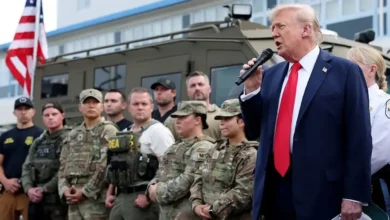
Abbott criticized former US President Donald Trump’s decision to impose a 25% tariff on Indian oil imports from Russia, calling it a “misplayed hand.”
“I’m a supporter of Trump, but I think he misplayed his hand with India when he imposed those punitive tariffs — especially when other countries, like China, were doing far worse and weren’t penalized,” Abbott remarked.
He also reflected on Cold War dynamics, saying the US “made a mistake” by siding with Pakistan — “a military dictatorship” — over India, the world’s largest democracy.
“There are good people in Pakistan, but at heart it’s still a military society with an Islamist streak,” he said. “I’m not saying the US shouldn’t work with Pakistan, but it should know where its real friends are.”