Explained: Why President Trump Deployed the National Guard in the U.S. Capital
A detailed look at the legal battles, political controversies, and rising security concerns surrounding the massive troop presence in Washington, D.C.

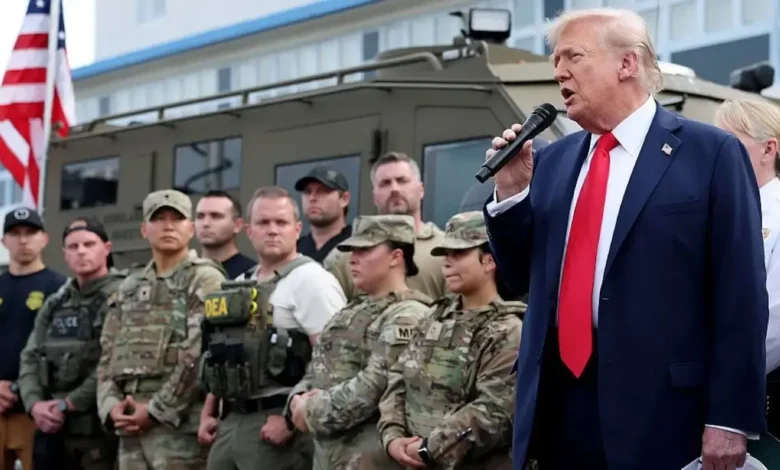
President Donald Trump’s deployment of more than 2,100 National Guard troops to Washington, D.C., has sparked renewed national debate after two service members were shot near the White House earlier this week. The attack, which left one Guard member dead and another critically injured, revived widespread concerns about the legality, necessity, and political motivations behind Trump’s unprecedented use of federalized military support in the nation’s capital.
While the president has defended the deployment as essential to restoring law and order, critics argue that the presence of thousands of troops on the streets of Washington is both unconstitutional and politically motivated. Legal challenges continue to mount, and federal courts have already ruled aspects of the deployment unlawful — a decision that could shape the limits of presidential authority for years to come.
In this comprehensive analysis, we break down why the Guard was sent, what they are doing on the ground, the surrounding political tensions, and the legal battles headed for the Supreme Court.
Why the National Guard Was Sent to Washington, D.C.
In August, President Trump ordered the deployment of troops to the nation’s capital, declaring Washington a “filthy and crime-ridden embarrassment.” His statement came despite data from the Metropolitan Police Department showing that violent crime levels had dropped significantly compared to previous years.
The deployment was part of a broader strategy in which Trump sent troops to cities he claimed were struggling with rising crime. Earlier in the year, similar operations took place in Los Angeles and Memphis. Notably, all the cities chosen for these deployments are led by Democratic administrations — a fact that has fueled accusations that Trump is using federal forces to target political opponents rather than address genuine security concerns.
Trump has denied these claims, insisting that the deployments were based strictly on public safety needs. “This is about protecting American citizens,” he said during a televised briefing. “We are restoring order where local leaders have failed.”
The Washington contingent is composed of a mix of active D.C. National Guard members and troops from seven Republican-led states. Initially numbering just under 1,800, the force has since grown to more than 2,100 personnel. Following the shooting of two Guard members this week, Secretary of Defense Pete Hegseth announced that an additional 500 troops would be deployed immediately.
What the Troops Are Doing on the Ground
Unlike typical National Guard deployments tied to natural disasters or civil unrest, the mission in Washington, D.C. has involved a broad range of unusual duties. Troops have been patrolling the National Mall, Metro stations, and tourist sites. Others have been seen removing graffiti, picking up trash, mulching public areas, and painting fencing near federal buildings.
According to Joint Task Force–DC (JTF-DC), which oversees the operation, the Guard is present primarily to “provide a visible crime deterrent.” Officials have emphasized that troops are not permitted to perform direct law-enforcement functions, such as making arrests or conducting searches.
However, this has not prevented growing public concern about the militarization of the capital. When the deployment first began, troops were unarmed. But within weeks, as tensions rose between city officials and the White House, Guardsmen were authorized to carry weapons — a decision heavily criticized by residents and civil rights groups.
City leaders have described the presence of armed troops as unnecessary and provocative, especially in a city that has its own well-trained metropolitan police force.
Legal Challenges to the Deployment
The legality of Trump’s domestic troop deployments has been a point of fierce debate throughout his presidency, and the Washington operation is no exception.
In September, the Attorney General of Washington, D.C., filed a lawsuit arguing that Trump had abused his executive authority by ordering a military presence in the capital without sufficient justification. Earlier this month, a federal judge agreed, ruling that the deployment was unlawful. However, the judge paused the order for 21 days to give the Trump administration time to appeal.
Legal experts say the case could ultimately determine how far a president can go in ordering domestic military operations absent an emergency.
Beyond Washington, courts have temporarily blocked Trump’s troop deployments in Chicago and Portland, both cities where Democratic leaders have strongly opposed the use of federal forces. The Supreme Court is expected to issue a final ruling in the coming weeks, a decision that could redefine the boundaries of federal authority on U.S. soil.
The Trump administration has repeatedly defended the legality of the operation. Officials argue that the deployment falls under the president’s broad national-security powers and say the Guard’s presence has significantly reduced crime — despite local police data contradicting these claims.
Earlier in the year, California successfully challenged Trump’s deployment of troops to Los Angeles following protests surrounding immigration arrests. A district court ruled that the operation violated federal law, but an appeals court later reversed the decision, allowing the deployment to continue.
These legal back-and-forth battles illustrate the deep constitutional and political divides surrounding Trump’s approach to domestic security.
Why the Debate Isn’t Going Away
The shooting of two National Guard members has intensified scrutiny of the deployment. Critics argue that the troop presence has made the capital a target rather than enhancing safety. Supporters claim the attack proves the need for a stronger security footprint in a city that has faced rising political tension.
For now, more troops are arriving in Washington, D.C., even as the legal fate of the deployment remains uncertain. The president insists the Guard will stay “as long as necessary,” while city officials continue to demand their removal.
What is certain is that the coming months — and the pending Supreme Court decision — will determine whether future presidents can deploy federal troops domestically in situations that fall far outside traditional emergencies.


