Nokia 1100 Review
Two decades later, the Nokia 1100 remains the gold standard for simplicity, durability, and design perfection.

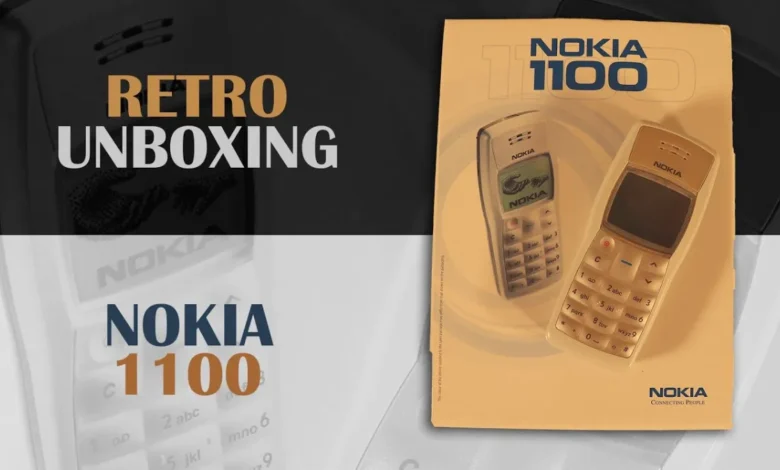
Before smartphones ruled the world, before touchscreens and app stores, there was the Nokia 1100 — the humble, indestructible, and unassuming mobile device that changed communication forever. Launched in 2003, the Nokia 1100 went on to sell over 250 million units globally, making it one of the best-selling phones in human history. It was not powerful, nor flashy — but it was practical, reliable, and built like a tank.
In an age where phones now boast AI processors, 200MP cameras, and foldable glass displays, the Nokia 1100 reminds us what true innovation once meant: accessibility, durability, and purpose. This is a nostalgic look back — and a critical appreciation — of the phone that truly made mobile technology mainstream.
Design: Built To Survive The Apocalypse
The Nokia 1100’s design is simplicity perfected. Measuring just 106 x 46 x 20 mm and weighing 86 grams, it felt like holding a pebble — small, sturdy, and reassuring. Its rubberized grip and dust-resistant keypad made it nearly impossible to drop and easy to use even in harsh conditions.
The monochrome screen was minimal, displaying only the essentials: time, battery, signal, and text. Yet, it was bright, legible, and functional under any lighting. The removable battery cover, chunky buttons, and curved design gave it an ergonomic charm few phones have replicated since.
There was no glass, no titanium, no fragile display edges — just good old Finnish engineering that could survive a fall, a flood, or even a trip through the washing machine.
The Nokia 1100 was never designed to impress your friends — it was designed to never fail you.
Display and Interface: Simple, Efficient, Unbreakable
The Nokia 1100 featured a 96 x 65-pixel monochrome LCD display capable of showing two lines of text. In an age of ultra-HD panels, that sounds primitive — but it did exactly what it needed to.
The phone’s user interface was built on the Series 30 OS, which prioritized clarity and speed over complexity. Navigation was handled through a central D-pad and two soft keys, and the menus were organized in a way that anyone — from a child to a grandparent — could understand instantly.
The result was a device that never froze, never crashed, and never confused its users. Every function was accessible within seconds — messaging, contacts, alarm clock, and even those legendary Nokia ringtones.
And yes, it had Snake II, the most addictive game of its time — a cultural icon in its own right.
Performance: Zero Lag, Infinite Reliability
The Nokia 1100’s internal specs seem laughable today — a few kilobytes of RAM and a basic single-core processor. But that’s missing the point. The 1100 wasn’t about performance metrics; it was about reliability.
Every action was instantaneous. There were no app crashes, no overheating, no updates that slowed the phone down. It booted in seconds and ran for years — a kind of stability modern phones can only dream of.
In real-world terms, the Nokia 1100 defined what it meant to just work. It was the phone that never quit — even when dropped from rooftops, drenched in rain, or buried in snow.
Battery Life: The True Legend
Perhaps the Nokia 1100’s most celebrated feature was its battery endurance. With a removable 850mAh BL-5C battery, the phone could last up to two weeks on standby and up to 6 hours of talk time.
This was the era when you charged your phone once a week — not every night. The energy-efficient display and minimal system processes meant that the phone could function for days even with heavy use.
For travelers, field workers, and rural users with limited access to electricity, this was a revolution. The 1100 didn’t just make communication easier — it made it possible in places where smartphones today would die in hours.
Features: The Essentials, Perfected
Despite its minimalism, the Nokia 1100 had all the essential features of a great communication device:
-
Flashlight: Activated with a single button, an invaluable feature before smartphones had torch apps.
-
Polyphonic Ringtones: Customizable tones that defined an era of personalization.
-
Alarm, Stopwatch, and Calendar: Practical utilities for everyday use.
-
Dust-Resistant Keypad: Engineered for real-world environments, not just city offices.
It didn’t have Bluetooth, Wi-Fi, or GPS — but what it had worked flawlessly. The Nokia 1100 reminded the world that true usability doesn’t come from excess; it comes from excellence.
Durability: The Phone That Wouldn’t Die
If you owned a Nokia 1100, you probably remember one thing — it was nearly indestructible. Users around the world have shared stories of dropping it from balconies, running it over with cars, and even freezing it in ice — only to find it still worked perfectly.
The 1100 became a symbol of durability and a meme-worthy icon of toughness, long before viral marketing existed.
For millions of people in developing countries, the 1100 wasn’t just a gadget — it was a lifeline. It worked in sandstorms, tropical humidity, and freezing cold. It didn’t care about 5G — it just cared about keeping you connected.
Legacy: The Phone That Defined a Generation
The Nokia 1100 sold over 250 million units because it did one thing perfectly: it worked for everyone. It was affordable, available, and indestructible. From African villages to European cities, it united people under one simple goal — communication without barriers.
In many ways, the Nokia 1100 laid the foundation for today’s mobile revolution. It taught the world that connectivity wasn’t a luxury — it was a necessity.
And even now, in 2025, the 1100 remains a nostalgic symbol of reliability. Tech enthusiasts still trade vintage units, collectors restore them, and some even use them as emergency backup phones that simply refuse to die.
The Nokia 1100 didn’t just survive history — it became a part of it.
Verdict: The Purest Expression of What a Phone Should Be
The Nokia 1100 is more than a device — it’s a philosophy. It represents a time when design was functional, technology was stable, and phones were tools, not distractions.
Even today, it stands as a reminder that progress doesn’t always mean complexity — sometimes, the simplest solutions are the most revolutionary.
Final Verdict: 10 / 10
Pros: Legendary battery life, indestructible build, iconic design, reliable performance.
Cons: No internet, limited features by modern standards.
For collectors, purists, or anyone craving a reminder of simpler times, the Nokia 1100 remains an eternal classic.


