New Twist in Satara Doctor Suicide Case: Woman Alleges Fake Postmortem Report, Demands Probe
Mother claims her daughter’s autopsy report was falsified under pressure; calls for reinvestigation as political row deepens in Maharashtra.

By Orlin Milinov
Mumbai:
The investigation into the tragic suicide of a 26-year-old doctor in Maharashtra’s Satara district has taken a fresh turn, with new allegations suggesting that the doctor herself may have been coerced to falsify a postmortem report before her death.
A local woman, Bhagyashree Maruti Pachangne, has alleged that her daughter’s autopsy report — signed by the same doctor who later died by suicide — was deliberately fabricated under political and police pressure. Bhagyashree’s daughter, Deepali Maruti, was married to an Indian Army officer, and she now claims her daughter did not die by suicide but was murdered.
Bhagyashree’s allegations have added yet another layer to an already complex case that has gripped Maharashtra’s political and legal establishment.
Allegations of a Fake Postmortem Report
According to Bhagyashree Pachangne, her daughter Deepali, who was six months pregnant and mother to a one-and-a-half-year-old girl, died under suspicious circumstances on August 19. The grieving mother insists that her daughter’s postmortem report — signed by the deceased Satara doctor — contained false information inconsistent with what the family witnessed.
“My daughter could not have taken her own life. She was pregnant and deeply attached to her child. The postmortem report doesn’t match what we were told. It is entirely fabricated,”
Bhagyashree Pachangne told reporters, demanding a thorough investigation into both deaths.
She claims that the report was altered under pressure from politically connected individuals and that the doctor, who later died by suicide, was forced to sign it against her will.
“The doctor was under pressure to change autopsy details. Political people in Phaltan often pressured her to modify medical reports since she handled autopsy duties regularly,”
said a relative of the deceased doctor, speaking to the Press Trust of India (PTI).
Bhagyashree further alleged that her son-in-law, Ajinkya Hanmant Nimbalkar, a serving Indian Army officer, along with his family, had mentally and physically harassed Deepali. She claims her daughter had been repeatedly abused, and despite reaching out to police, no action was taken.
“Even five days after my daughter’s death, we were not given the postmortem report. When it finally came after a month, it was entirely falsified. My son-in-law used his political and police connections to bury the truth,” she said.
Details of the Doctor’s Suicide
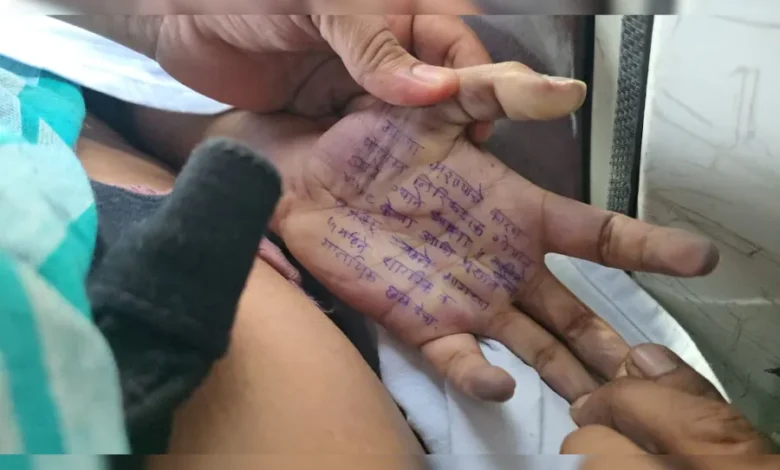
The doctor, who was found dead earlier this month, had written on her palm that she had been raped four times by Sub-Inspector Gopal Badane and had been subjected to sustained mental and physical abuse.
A four-page suicide note recovered from her residence detailed how she was pressured by police officers and a former Member of Parliament’s aides to issue fake fitness and medical certificates for accused individuals, many of whom were never brought in for examination.
She also named software engineer Prashant Bankar, the son of her landlord, for mentally harassing her.
The letter has since sparked a massive political row in Maharashtra, with the Congress accusing the ruling BJP-led Mahayuti government of shielding the accused and allowing police misconduct to flourish.
“When those sworn to protect become predators, where is justice? The doctor pleaded for action several times, yet the government remained silent,”
Congress leader Vijay Namdevrao Wadettiwar said in a post on X.
Arrests and Investigation Progress
Following public outrage and nationwide media attention, Prashant Bankar was arrested on charges of mental harassment, and Sub-Inspector Gopal Badane later surrendered to police. Badane has been suspended from service pending investigation.
A case of rape and abetment of suicide has been registered against both men under relevant sections of the Indian Penal Code.
“We are investigating the matter based on the evidence collected so far. A case has been lodged, and the officer has been suspended,”
said Sunil Phulari, Inspector General of Police (Kolhapur Division).
Meanwhile, women’s rights groups and medical associations have called for independent oversight, arguing that the doctor’s death exposes deep-seated corruption and political interference in rural hospitals.
Fresh Demands for a Broader Probe
With Bhagyashree Pachangne’s new claims, the spotlight has again turned to systemic corruption in medical and law enforcement institutions. Activists are urging the Maharashtra government to expand the scope of the investigation to include allegations of falsified postmortem reports, coercion of medical staff, and political intimidation.
Human rights advocates stress that the deaths of both women — the doctor and Deepali Maruti — appear intertwined by a pattern of silencing and suppression.
“This is no longer just a case of sexual assault or abetment. It’s about institutional failure and how easily evidence can be manipulated through political connections,”
said a senior advocate familiar with the case.
As public pressure builds, opposition leaders are calling for a judicial inquiry to ensure transparency and accountability. Civil society groups have also demanded stronger workplace protection for government medical officers who routinely face coercion from law enforcement and political officials.
The Road Ahead
The Maharashtra police have yet to confirm whether the fresh claims by Bhagyashree Pachangne will be included in the ongoing investigation. The development has nevertheless intensified public scrutiny, with demands for forensic re-examination of Deepali’s autopsy and a full audit of all postmortem cases handled by the deceased doctor in Phaltan.
As the investigation deepens, both families — the Pachangnes and the deceased doctor’s relatives — continue to seek justice. What began as an individual tragedy has now evolved into a broader debate about abuse of power, integrity in medical practice, and women’s safety in public service.