India To Invest ₹65,400 Crore in Fighter Jet Engines Over the Next Decade
Government plans to procure 1,100 engines for indigenous and advanced aircraft programs by 2035

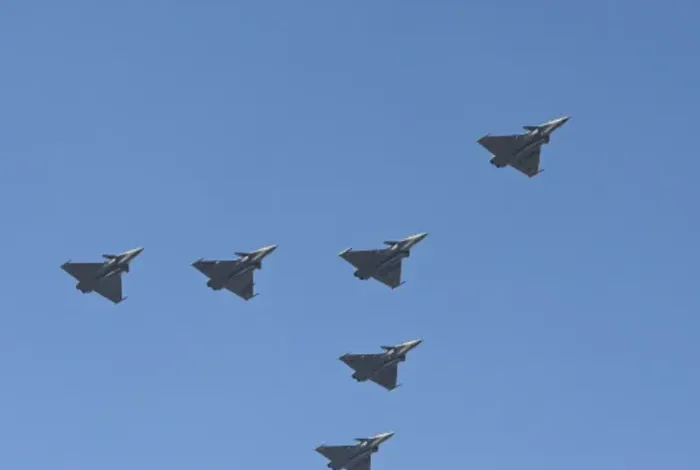
By Orlin Milinov
New Delhi — India is set to spend approximately ₹65,400 crore over the next ten years to procure and develop fighter jet engines as part of its ambitious plan to strengthen domestic defence manufacturing and reduce reliance on foreign suppliers.
According to S. V. Ramana Murthy, Director of the Gas Turbine Research Establishment (GTRE) — a state-run defence research laboratory — the country will need around 1,100 engines to support a range of fighter aircraft programs currently in different stages of development.
Building India’s Indigenous Engine Ecosystem
Speaking at a defence industry event in New Delhi, Murthy emphasized the urgent need to accelerate indigenous engine development through a “mission mode” approach.
“There is a need to work on mission mode to create an ecosystem for indigenous fighter engines,” he said, highlighting the importance of building dedicated infrastructure such as a high-altitude testing facility and an advanced industrial base.
India’s long-running effort to develop its own Kaveri jet engine — originally intended to power the indigenous Tejas light combat aircraft (LCA) — has faced persistent delays due to technological limitations.
However, Murthy noted that a derivative of the Kaveri engine could still be repurposed for India’s upcoming unmanned combat aerial vehicle (UCAV) program.
Next-Generation Fighter Jet Collaboration
Murthy, who leads India’s next-generation fighter engine initiative, confirmed that discussions are underway with major global engine manufacturers to co-develop a fifth-generation stealth fighter engine.
International aerospace giants including France’s Safran, Britain’s Rolls-Royce, and U.S.-based General Electric (GE) have all expressed interest in partnering with India on the project.
The advanced aircraft, known as the Advanced Medium Combat Aircraft (AMCA), is expected to roll out its first prototype in 2028, according to Indian defence officials.
This marks a significant step toward India’s long-term vision of producing a home-grown stealth fighter with cutting-edge propulsion systems and reduced radar visibility.
Private Sector Participation and Strategic Goals
For the first time, the Indian government plans to open fighter aircraft engine production to private firms, breaking the long-standing monopoly of Hindustan Aeronautics Limited (HAL) — India’s state-owned aerospace company that currently manufactures most of the nation’s military aircraft.
This move aligns with Prime Minister Narendra Modi’s “Atmanirbhar Bharat” (Self-Reliant India) initiative, which seeks to bolster domestic defence manufacturing capacity and attract foreign defence firms to establish production partnerships in India.
“The goal is to develop an ecosystem where Indian companies can co-design, manufacture, and maintain advanced propulsion systems domestically,” a senior official said.
Industry experts view this as a strategic push to enhance India’s defence self-sufficiency, strengthen its aviation technology base, and reduce long-term procurement costs from foreign suppliers.