Explained: Why Japan’s Ruling Coalition Collapsed — And What Comes Next
Komeito’s withdrawal over a political funding scandal leaves Japan’s parliament divided and clouds Sanae Takaichi’s historic bid to become the country’s first female prime minister.

By Orlin Milinov
Japan:
Japan’s ruling coalition was thrown into turmoil on Friday after the Komeito party announced its departure from the government, ending a decades-long partnership with the Liberal Democratic Party (LDP) and raising uncertainty over Japan’s political stability.
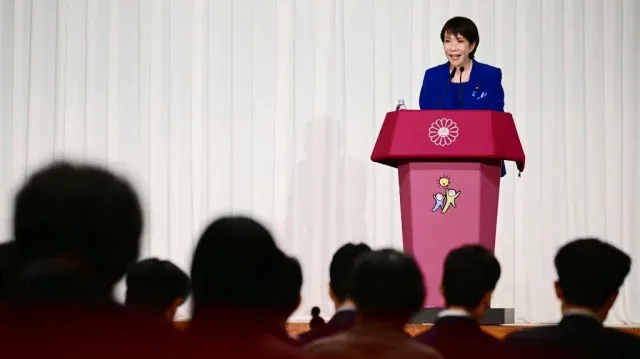
The move delivers a major blow to Sanae Takaichi, the newly appointed LDP leader, who had been poised to become Japan’s first woman prime minister. Her ability to command a parliamentary majority is now in question.
What Triggered the Collapse?
Komeito leader Tetsuo Saito cited the LDP’s failure to strengthen political funding regulations as the key reason for the party’s withdrawal. This decision follows a slush fund scandal that has rocked the LDP since last year, involving the alleged misappropriation of millions of dollars from fundraising ticket sales.
The scandal led to the resignation of former Prime Minister Fumio Kishida, the dissolution of several powerful LDP factions, and a sharp decline in public trust.
Komeito was further angered when Takaichi appointed Koichi Hagiuda, who had been linked to the funding controversy, to a senior LDP position.
“For a party that champions public integrity, this is impossible to justify,” said Hidehiro Yamamoto, a political sociologist at the University of Tsukuba. “It feels like Komeito is losing elections with the LDP rather than winning with them.”
Ideological Tensions and Policy Differences
Founded in the 1950s as the political wing of the Soka Gakkai Buddhist movement, Komeito has long represented moderate and pacifist voters. Its members have voiced growing discomfort with Takaichi’s conservative nationalism and her repeated visits to the controversial Yasukuni Shrine, which honors Japan’s war dead, including convicted war criminals.
The last sitting prime minister to visit Yasukuni was Shinzo Abe in 2013, an act that sparked diplomatic outrage from China and South Korea — two of Japan’s key regional partners.
What Happens Now?
The collapse of the LDP-Komeito coalition — which has governed almost continuously since 1999 — leaves the ruling party in a minority in both chambers of parliament. That means Takaichi will now need support from opposition lawmakers to pass legislation.
Reports suggest she has considered forming a new alliance with the Democratic Party for the People (DPP) due to shared economic priorities. However, DPP leader Yuichiro Tamaki voiced solidarity with Komeito on Friday, backing its stance on ending “money and politics” scandals.
Even with DPP support, the LDP’s 196 seats plus DPP’s 27 fall short of the 233 needed for a lower house majority.
Can Takaichi Still Become Prime Minister?
Under parliamentary procedure, Takaichi must win a majority of votes in the Diet to be confirmed as prime minister. Analysts believe this will be difficult unless she can forge new alliances or secure defections from opposition ranks.
“The only realistic scenario for Takaichi is a divided vote that leads to a second-round runoff,” said Sadafumi Kawato, professor emeritus at the University of Tokyo. “But if opposition blocs unite around one candidate, Japan could be looking at a change in government.”
For now, Japan’s political future remains uncertain — with the country poised between continuity under a weakened LDP and the possibility of a historic power shift.