Admiral Tripathi: Maritime Security Is ‘Dynaxic’, Beyond Mere Threat Containment
Indian Navy Chief urges collaborative, future-ready approach to Indo-Pacific maritime governance at IPRD 2025

By Orlin Milinov
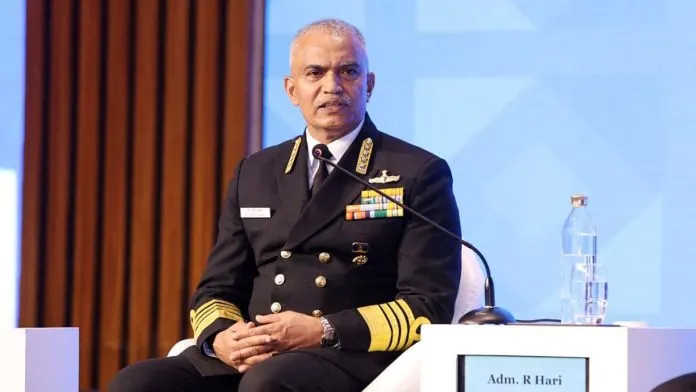
New Delhi — In a powerful address at the Indo-Pacific Regional Dialogue (IPRD) 2025, Indian Navy Chief Admiral Dinesh K Tripathi called for a paradigm shift in how nations perceive maritime security, describing it as a “dynaxic challenge” — one that is both dynamic and complex, transcending traditional notions of threat control.
Speaking at the inaugural session of the three-day conclave being held at the Manekshaw Centre from October 28 to 30, Admiral Tripathi said the maritime domain today faces a convergence of economic, environmental, and technological disruptions that demand collective global responses.
“Across centuries, the seas have been humanity’s oldest highways — carrying not just commerce and culture, but curiosity and courage,” the Navy Chief said. “From shaping the fortunes of countries to scripting the future of humanity, the seas have always been the truest measure of our shared destiny.”
A New Maritime Vision for a Turbulent Era
Admiral Tripathi stressed that maritime security must no longer be viewed “through the narrow prism of threat containment,” but rather as part of a wider strategic continuum that links security, governance, environment, and development.
He explained that maritime security is “dynaxic” because it is driven by three converging currents:
-
Commercial disruption – Global seaborne trade, he noted, is projected to grow by just 0.5% in 2025, down from 2.2% in 2024, reflecting strategic fragility amid conflicts and coercive policies. The Red Sea crisis, he said, showed how a single chokepoint can disrupt freight, insurance, and food prices globally.
-
Transnational turbulence – Admiral Tripathi cited the growing mix of illegal fishing, piracy, arms trafficking, and human smuggling, alongside environmental stressors such as rising sea levels and marine pollution.
-
Technological disruption – The Navy Chief highlighted how AI, autonomous systems, and satellite technology are reshaping maritime surveillance and response but also increasing vulnerabilities through cyber intrusions and GPS interference.
Strengthening Regional Cooperation
Admiral Tripathi revealed that the Information Fusion Centre – Indian Ocean Region (IFC-IOR) in Gurugram currently hosts 15 international liaison officers (ILOs) and aims to expand to 50 ILOs by 2028, enhancing information-sharing across partner nations.
The IFC-IOR, established in 2018, has become a cornerstone of India’s maritime diplomacy, fostering collaboration to ensure safety and security in the Indo-Pacific.
“The maritime domain mirrors the wider disorder of our times, demanding collective solutions that transcend jurisdictional and cartographic silos,” Admiral Tripathi said.
Holistic Maritime Security Framework
The Navy Chief called for an integrated approach to maritime governance, blending deterrence, environmental stewardship, and humanitarian response under one strategic framework.
“A truly holistic approach must integrate deterrence, governance, law enforcement, environmental protection, and humanitarian action into a single continuum of purpose,” he said, adding that such cooperation must remain “context-sensitive,” since one-size-fits-all strategies rarely succeed at sea.
The IPRD 2025, jointly hosted by the Indian Navy and the National Maritime Foundation (NMF), brings together strategic leaders, diplomats, and maritime experts from across the Indo-Pacific to discuss the theme: “Promoting Holistic Maritime Security and Growth: Regional Capacity-Building and Capacity Enhancement.”
Concluding his remarks, Admiral Tripathi urged the international community to “sail beyond the turbulence of the present into the tranquillity of a secure and sustainable maritime future.”